
Montgomery County Multi-Day Arrest Record
The Sheriff posts no 72-hour or seven-day arrest log. City departments publish no full blotter either. That means a multi-day Montgomery County arrest record is a reconstruction, not a single official list. Fix the date range up front, note which agency produced each item, and keep arrest time, booking time, court filing, and publication date clearly apart.
The official Sheriff page is the proper first source.
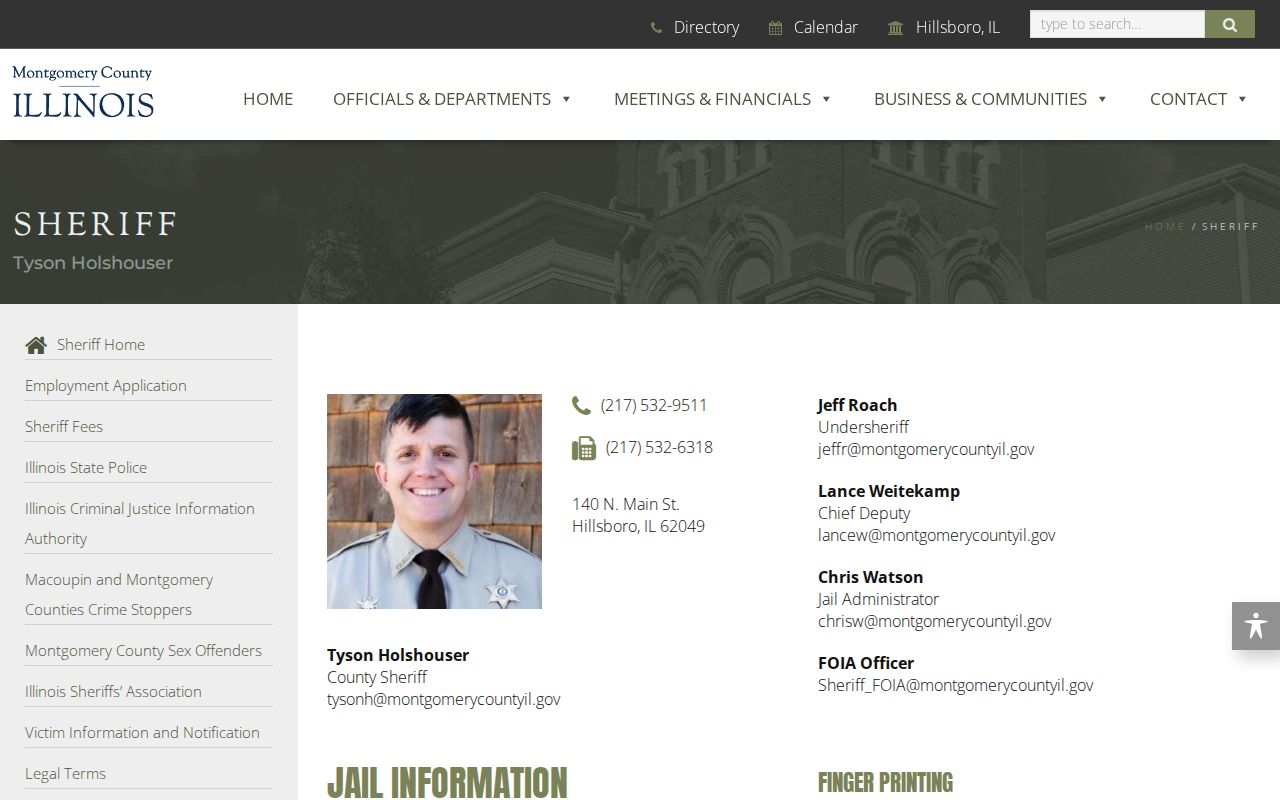
The capture confirms official contacts and services, while no public multi-day log is visible.
Read Montgomery County Arrest Reports
- Choose exact start and end dates rather than “recent.”
- List likely agencies: Sheriff, Illinois State Police, Hillsboro Police, Litchfield Police, Nokomis Police, or another jurisdiction.
- Ask each relevant agency for its arrest report or incident identifier.
- Use Sheriff_FOIA@montgomerycountyil.gov for county booking records, naming the person and approximate date.
- Search the county’s Judici court after allowing for filing delay.
- Check local news only for selective reports, then verify agency and court facts.
- Confirm present custody separately through the jail or VINE.
For a same-day question, start with Arrested Today. The recent arrests hub goes deeper into booking photographs, warrants, and retention.
Montgomery County Arrest Report Fields
| Field | Reading rule |
|---|---|
| Arrest date and time | Event reported by the arresting office |
| Booking date and time | County intake may occur later |
| Agency | May differ from the holding facility |
| Charge at booking | Accusation subject to amendment or dismissal |
| Bond or release | Point-in-time status, not permanent result |
| Case number | Connects the event to court follow-through |
| Disposition | Must come from later court records |
Similar names do not make one person. Match entries by booking or case number instead. Also leave out Social Security numbers, medical details, victim data, and protected juvenile records.
Montgomery County Weekend Arrest Gaps
Montgomery County has no posted update schedule. Nothing supports a tidy Monday catch-up pattern either. Jail processing runs on its own clock, court filings wait for business hours, and newspapers follow their issue dates. So label every report with the event date and the publication date. When a period crosses a holiday or a weekend, widen the window rather than reading silence as proof that nobody was arrested.
Four clocks govern a multi-day check. The arrest time belongs to the event itself. Booking time marks the jail's intake. Filing time belongs to the court. The story date reflects a publisher's schedule. Someone arrested late Friday may not surface in a court search until the next business day, and a weekly paper may report the arrest days after both. Those gaps argue for checking the named agency directly, never for estimating a weekend total from news coverage.
Montgomery County Arrest Report Archives
For older records, ask the Sheriff FOIA officer what is still maintained and which retention series applies. Montgomery County publishes no fixed online retention period. The Circuit Clerk holds public court filings and dispositions. For transferred historical county material, the Illinois archival route is the lead to follow, though it covers history, not current jail status. An old inventory describes a jail register starting in 1872, which says nothing about whether modern booking photos survive.
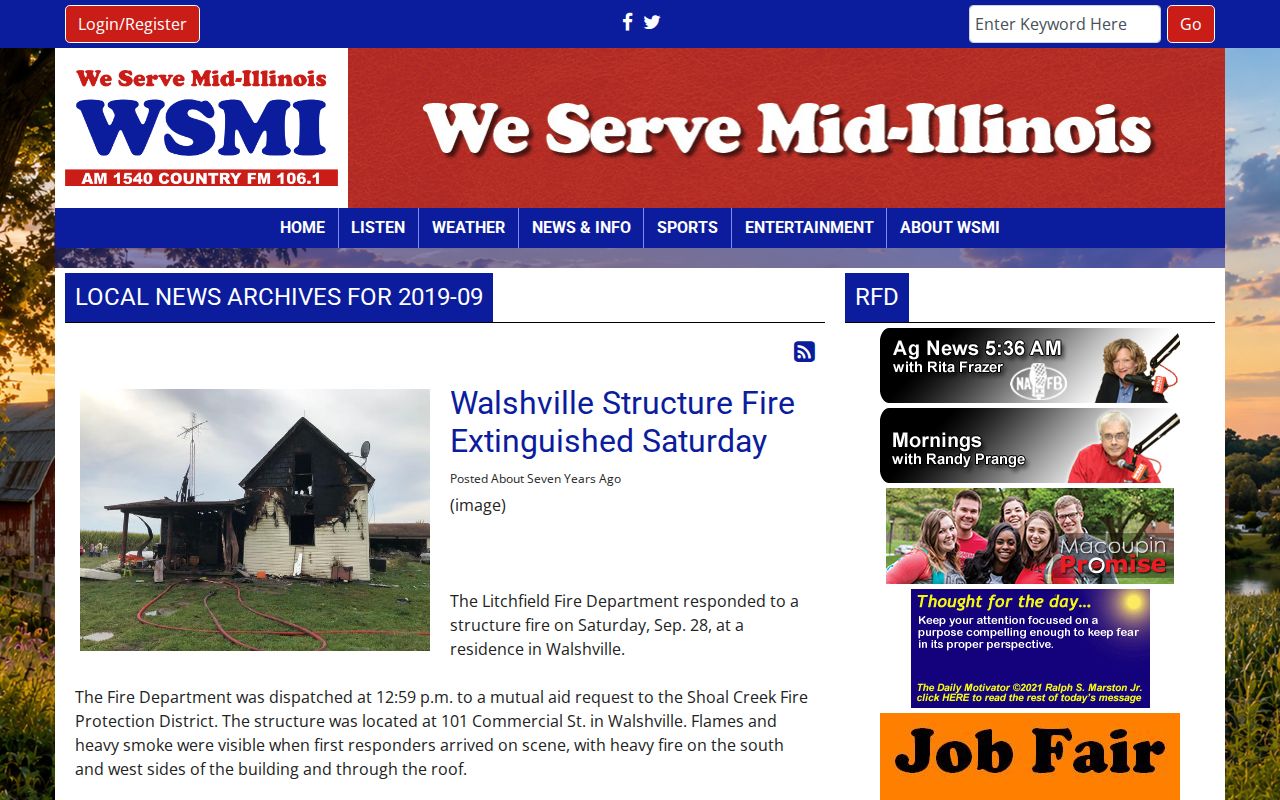
Third-party sites are not official retention either. Mugshots.com carries mostly 2011 to 2021 material. Busted Newspaper and RecentlyBooked offer county-local sections. WSMI ran a 2019 story. All are secondary sources that can omit outcomes and never show present custody.
Historical jail-register research follows a different path. Illinois archival material describes a county register begun in the nineteenth century that recorded commitment and discharge facts, with a gap noted in the old inventory. That description promises no photographs. It also offers no proof that a modern booking file ever moved to the archive.
Start recent requests with the sheriff. If a record was transferred, ask for the repository, record series, and inclusive dates. Ask also for the index method, access limits, and reproduction process before contacting IRAD.
Link Arrest Reports to Court Outcomes
The Montgomery County Circuit Clerk allows weekday inspection and links to Judici. Charging documents, bond orders, amended charges, dismissals, pleas, trial results, sentencing, and sealing all live there. A booking report cannot tell that story.
Montgomery County News Arrest Reports
Journal-News is the strongest local lead. It covers Hillsboro, Litchfield, Nokomis, and the county, but it runs on issue dates rather than a continuous feed. Heartland Newsfeed has a county category without a recurring booking section. Taylorville Daily News has covered Nokomis transfers and multi-agency operations. The Capitol City Now report is an example of that regional enforcement coverage. Litchfield Local adds community reporting. All are selective and may lag.
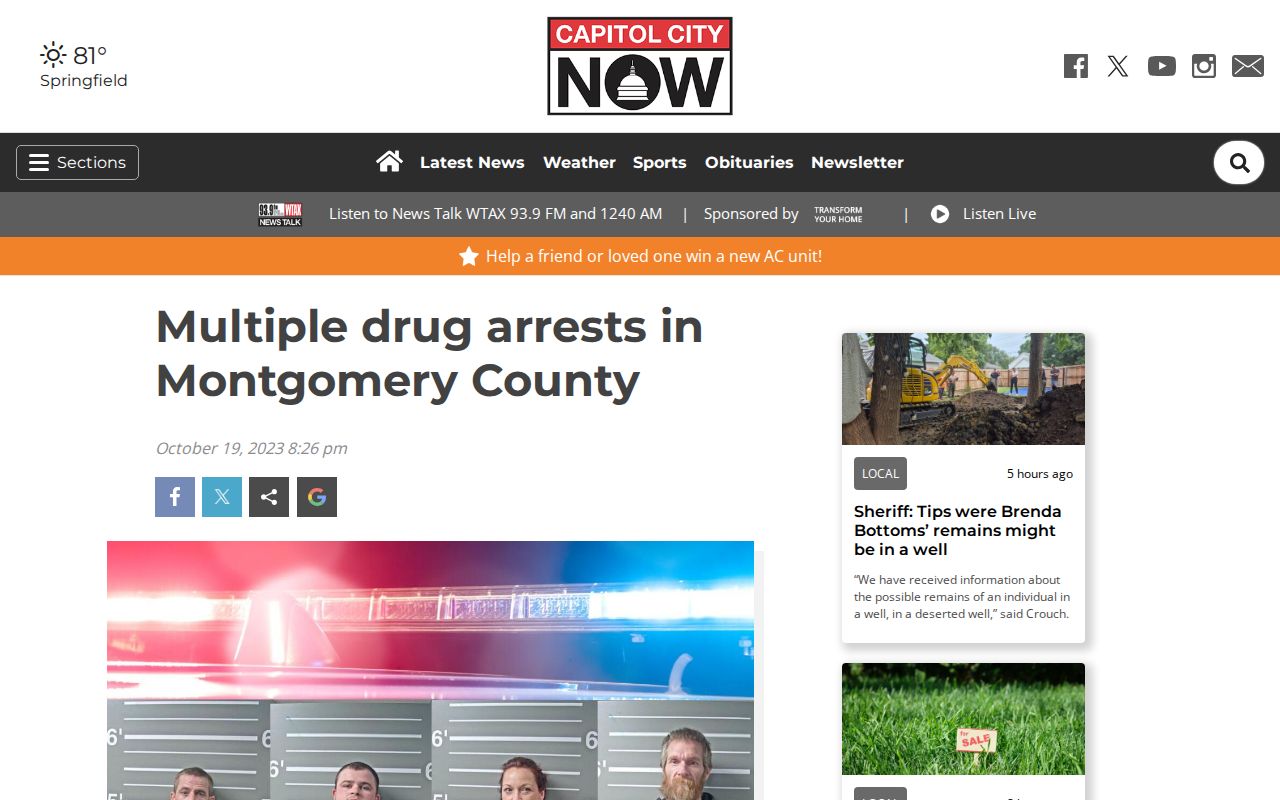
News stories supply agency context. They do not supply booking coverage or present custody. Write "an arrest reported by" the outlet and cite the date. Then verify with the named agency and court. Never treat an editorial photo as the county booking image. Use each story as a lead, not as proof of who is in custody now.
Montgomery County Jail Reports Differ
The county's own numbers tell a story about workload, not about names. The Montgomery County department reports track jail operations in aggregate. A September 2025 report covered 133 detainees for the prior period. The average daily population sat at 42.23. The average stay ran 17.37 days. Later reports shifted those totals. None of this says a particular person was arrested in Montgomery County. It won't confirm an arrest on a given day. Monthly figures are not daily arrest counts, so resist the urge to divide them. The 2024 IDOC jail inspection adds two more data points. Rated capacity was 42. Inspected population was 39. Those numbers describe the facility on the inspection date, not today's headcount. Keep the two tracks separate. County reports explain jail operations. The jail itself answers who is in custody now. FOIA reaches maintained booking material, and the court file carries the case onward.
Maintain a Montgomery County Arrest Source Log
A simple source log does a lot of work. For each arrest item in a date range, jot the event date and the date the source published or responded. Also record the arresting agency, the likely booking agency, a case number when one exists, and when you last checked it. That habit keeps a news publication date from masquerading as the arrest date. It also stops double counting. Two agencies' records on the same Montgomery County arrest won't be tallied twice. And it shows plainly where a gap remains. An unofficial site is a lead, never an endpoint. Don't copy its booking photo or accept its charge description as current. Go to the police or Sheriff record first. Then pull the court docket. Busted Newspaper and RecentlyBooked run county-local sections with free correction routes. Those are publisher policies, though, not law. Mugshots.com carries mainly older Montgomery material. Arrests.org shows no reliable local coverage. Pages for a different state's Montgomery must be tossed out. Every item in a multi-day report deserves one of three honest labels: an official event record exists, a public court follow-through exists, or the lead is secondary and unchecked. That beats dressing up thin material as a full police blotter.
Request Montgomery County Arrest Reports by Date
A date-range FOIA request works best when it is precise. Name the agency and the record type. Skip the demand for a speculative database export. Include names if you have them. Want aggregate activity instead? Ask whether a standing department report already supplies the counts. Request electronic copies and ask for any segregable nonexempt portions. Illinois agencies can respond in several ways. They may seek clarification. They may extend the ordinary noncommercial deadline where statute allows. They may also redact protected details or state that no responsive record is maintained. One fee trap deserves a flag. The Sheriff's fee schedule lists "BOOKING FEES $40.00." That line is not a record-copy price unless the office says so. Court copy charges live on the Circuit Clerk's separate schedule. Keeping those distinctions straight stops a service fee from turning into an invented public-record fee. Treat arrest records and booking records as distinct requests. Do that whenever the arresting office and the jail differ. A city police report may document the stop and the offense. The Sheriff may hold intake, receipt, discharge, and transfer records, plus any booking photograph. The Circuit Clerk keeps the later public case file. If a response is denied or partial, it should state its basis. It must say what was withheld. Narrow the dates or ask for the nonexempt portions rather than guessing at missing fields.
Public Record Search
Sponsored Results